

How AI Software Development Companies Eliminate Costly Human Errors
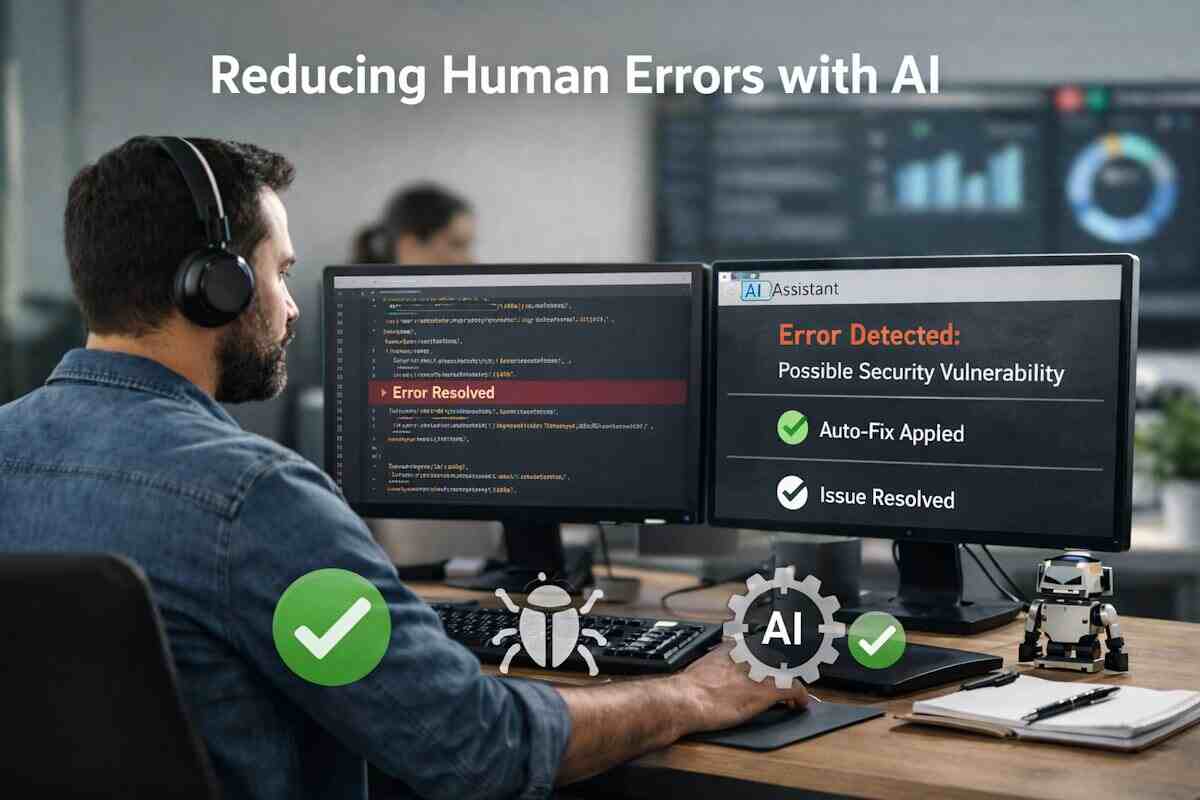
When deadlines pile up and workloads stretch thin, mistakes happen. No one’s perfect. But in software development, even small errors can snowball fast — broken features, security holes, lost time, higher costs. That’s where AI software development companies are making a real difference.
They’re not waving a magic wand. They’re just cutting out the mess that comes from repetitive tasks, unclear processes, and late-night coding slipups. Let’s break it down.
Humans mess up. AI keeps track.
Let’s be honest — even the best developers make mistakes. Sometimes it’s a forgotten semicolon. Sometimes it’s a faulty logic branch that brings down an entire system.
But AI doesn’t get tired. It doesn’t zone out. Once you set it up right, it keeps running the same way, every time. That’s a big deal for things like:
- Code review
- Testing
- Bug tracking
- Error logging
Instead of waiting for QA to catch something (or worse, a customer), AI tools catch it right at the time of coding. Typos, mismatched variables, unsafe patterns — all flagged instantly. Less back-and-forth. Fewer bugs in production.
Companies that offer AI development service usually bake these tools into their workflow from the start. It’s just part of how they build.
Standardization without slowing down
Every developer has their own style. That’s not a bad thing. But when ten people are pushing code into the same project with totally different habits, things break.
AI tools help create consistency. Think auto-formatters, linters, code suggestions — all guided by team standards. Developers don’t have to remember every rule. AI takes care of it.
That means clean, uniform code across the board. Easier to read. Easier to debug. And much easier to maintain long term.
If you’re managing a team or outsourcing, this kind of standardization removes a lot of the usual mess. That’s one big reason companies choose to hire AI developers instead of going the traditional route.
Repetitive work? AI handles that.
Think about how much time goes into testing. Running the same scripts over and over. Manually checking if something broke in one browser but works in another.
AI-driven test automation tools change the game here. They handle regression testing without burning out human testers. Some tools can even create test cases automatically based on how users interact with the app.
The same goes for deployments. DevOps teams use AI-powered tools to predict when and where failures might happen. That way, they can prevent outages before they hit users.
It’s not just about saving time — it’s about cutting down risk. Every manual step is a chance for someone to miss something. AI reduces those chances.
Smart predictions stop problems early
AI doesn’t just clean up messes. It can stop them from happening.
Imagine your team is working on a big new feature. You’re pushing changes fast. But AI flags that a certain change might slow down performance — because it’s seen a similar pattern before.
Or maybe you’re seeing user churn, but can’t pinpoint why. AI looks at usage data and tells you which actions are linked to drop-offs. That leads to faster fixes — and fewer support tickets.
These kinds of insights used to take a lot of time, guesswork, and trial-and-error. Now, AI tools surface them before they explode into bigger issues.
A lot of AI Hiring Platform solutions are baking these predictive features right into their dashboards. It’s not just about hiring the right people anymore — it’s about helping them work smarter from day one.
Hiring better, not just faster
Speaking of hiring — let’s talk recruitment. Ever spent weeks screening resumes, only to realize none of them really match the role?
AI platforms can scan thousands of candidate profiles and highlight the ones that fit best. Not just based on keywords, but based on actual performance data, coding samples, and past project types.
And they get better with time. The more you use them, the more accurately they predict who’ll be a good fit.
So instead of wasting hours on mismatches, you get quality candidates fast. Companies that want to hire AI developers are using these tools to skip the fluff and go straight to interviews that matter.
Plus, many platforms offer coding assessments, live challenges, or behavioral analysis — all AI-driven. That means less human bias in the process, too.
Real-time monitoring means faster response
Let’s say your app goes live. Everything looks good… for a while. Then one weird bug starts affecting 2% of users. Nothing obvious. Just a few odd behaviors here and there.
Without AI tools in place, you might not notice until users complain — or your support inbox starts flooding.
With AI monitoring, those anomalies get flagged in real-time. Whether it’s usage spikes, server issues, or crash loops, you get alerted early. And not just “hey something’s wrong,” but “here’s what’s likely causing it.”
Some platforms even roll back faulty deployments automatically if they detect errors right after release. That’s peace of mind you just can’t get from manual monitoring.
If you’re working with a team that offers ai development service, ask them what kind of monitoring they use. If it’s AI-powered, you’re in better hands.
Training the team without slowing down
AI can’t replace human creativity — not yet. But it can help your team stay sharp.
A lot of companies now use AI tools to support onboarding, skill development, and knowledge sharing. Think of it like an internal assistant: suggesting code fixes, explaining project architecture, and flagging outdated dependencies.
Junior devs get up to speed faster. Senior devs spend less time answering the same questions over and over.
And because it’s all baked into the tooling, the team doesn’t need to step away to go look something up. That’s more flow time, fewer distractions, and way fewer mistakes from misunderstandings.
AI isn’t perfect, but it’s reliable
Let’s not pretend AI solves everything. It can suggest wrong fixes. It can misread context. And yes, sometimes it gets in the way.
But in the hands of smart teams, it’s a net gain. It handles the grunt work. It catches the obvious stuff. And it frees up developers to focus on the parts that actually need human brains.
That balance is where the real benefits come in. When you hire AI developers who know how to use these tools without relying on them blindly, you get speed without the sloppiness.
So… what’s stopping you?
If your current dev team is bogged down with bugs, or you’re spending too much time fixing what should’ve worked the first time, maybe it’s time to rethink your setup.
AI software development companies aren’t just trendy. They’re built to reduce human errors, save time, and help your product grow without breaking at every turn.
Whether you’re looking to start small with one feature or build a full product with the help of an AI Hiring Platform, there’s a smarter, faster, less error-prone way to do it.
Why stick to old habits that cost you time and money?
Better quality, fewer headaches
Human error is normal. But repeating the same mistakes over and over? That’s just bad business.
The right blend of people and tools makes all the difference. And AI is proving to be one of the sharpest tools in the box — when used right.
If you want cleaner code, smoother launches, and fewer late-night firefights, it might be time to talk to a team that actually builds this way. Look for those offering a smart ai development service, or partner with a team that knows how to hire and manage AI-savvy talent.
The results speak for themselves.
